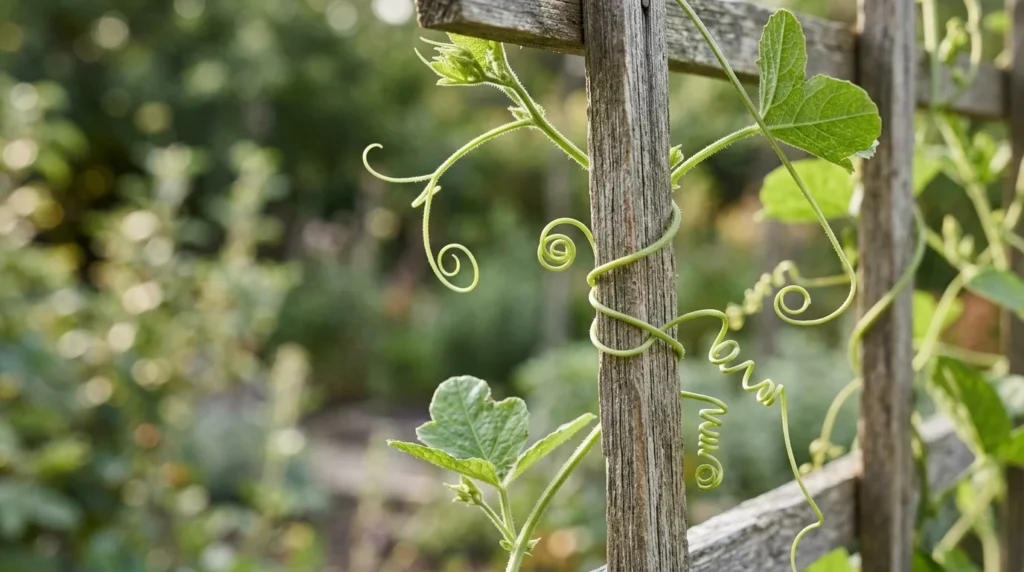

The best synonyms of tendrils depend on what you mean. When describing plants, useful alternatives include climbing shoots, curling stems, vine-like growths, and slender plant strands. When describing something that resembles a tendril, words such as filaments, strands, feelers, and tentacles may fit in certain contexts. However, these words are not all exact equivalents: a tendril is a slender, often curling plant structure that helps a climbing plant attach itself to a support.
Choosing the right synonym depends on whether you are describing a botanical feature, a delicate shape, or a figurative connection that spreads or reaches outward.
What Does Tendrils Mean?
Tendrils is the plural form of tendril, a noun commonly used in botany. A tendril is a thin, flexible, often curling structure produced by certain climbing plants. It can wrap around a branch, wire, trellis, or another support, helping the plant climb or remain attached.
For example:
The cucumber plant sent delicate tendrils around the garden trellis.
In this sentence, tendrils refers to the slender structures growing from the plant and curling around a support.
The word can also be used descriptively or figuratively. Writers may use tendrils for thin, curling strands of smoke, wisps of hair, or narrow extensions that spread into surrounding spaces. In figurative writing, it can describe connections, influence, or networks extending gradually into new areas.
For example:
Thin tendrils of mist drifted between the trees.
Here, the word creates an image of narrow, curling wisps rather than actual plant structures.
Understanding these different uses is important because a synonym that works for a climbing plant might not work for smoke, hair, or an abstract idea.
Best Synonyms of Tendrils
The following words and phrases are useful alternatives, depending on the intended meaning.
| Synonym or alternative | Meaning or nuance | Best context |
|---|---|---|
| Climbing shoots | Young plant growth that may help a plant extend upward or outward | Gardening and general botanical descriptions |
| Curling stems | Stems that bend or coil into curves | Describing plant shapes |
| Vine-like strands | Thin extensions resembling parts of a vine | Descriptive and accessible writing |
| Slender plant strands | Thin, elongated plant structures | General explanations |
| Filaments | Very fine thread-like structures | Scientific and descriptive contexts |
| Strands | Long, thin pieces of material | Hair, fibers, smoke-like forms, and figurative writing |
| Feelers | Structures used for sensing or exploring, particularly in animals | Animal anatomy or figurative descriptions |
| Tentacles | Flexible appendages, especially those of certain animals | Animal imagery or metaphorical descriptions |
| Wisps | Thin, delicate, irregular pieces or trails | Smoke, mist, hair, and poetic descriptions |
| Coils | Shapes formed by curling or winding | Describing a curled appearance |
| Extensions | Parts that project or spread from something larger | General and figurative contexts |
| Offshoots | Secondary growths or branches extending from a main structure | Plants, organizations, ideas, and networks |
Important distinction: Climbing shoots and curling stems describe plant growth, but they are not necessarily botanical synonyms for every type of tendril. Likewise, filaments, feelers, and tentacles can resemble tendrils in appearance or function without being the same structure.
For more helpful explanations, check out our guide to For more helpful explanations, check out our guide to Commonly Confused English Words
Tendrils Synonyms Explained in Detail
1. Climbing Shoots
Meaning: Young plant growth that extends from a plant and may help it grow along a surface or support.
Climbing shoots is a useful descriptive alternative when the emphasis is on a plant’s upward or outward growth. However, a shoot is a broader plant structure that may include stems, leaves, and buds. It is not necessarily a tendril.
Example:
The climbing shoots spread across the wooden frame as the plant grew.
Best use: Gardening articles, plant-care descriptions, and accessible explanations of climbing plants.
2. Curling Stems
Meaning: Stems that bend, twist, or form curves.
This phrase works when the visual appearance of the plant is more important than the precise botanical structure. It can help readers imagine the plant’s shape without requiring technical vocabulary.
However, tendrils are not always modified stems. Depending on the plant, they can develop from different plant organs, so curling stems should not be treated as a universal scientific replacement.
Example:
Curling stems reached toward the nearby fence.
Best use: General descriptions, gardening prose, and visual writing.
3. Vine-Like Strands
Meaning: Thin, elongated structures that resemble parts of a vine.
This phrase is especially useful when writing for a general audience. It communicates the appearance of tendrils without suggesting that the structures have a particular botanical origin.
Example:
Vine-like strands curled around the metal support.
Best use: Nature descriptions, educational material, and accessible product or scene descriptions.
4. Filaments
Meaning: Very fine, thread-like structures.
Filaments is a more technical-sounding word than strands. It can describe delicate, thread-like structures in biological, scientific, and other descriptive contexts.
The main difference is that filament emphasizes thinness and thread-like form. It does not necessarily imply curling, climbing, or attachment to a support.
Example:
Fine filaments extended from the surface of the organism.
Best use: Scientific writing when the structure being described is genuinely filamentous.
5. Strands
Meaning: Long, thin pieces of material, such as hair, fiber, or another thread-like substance.
Strands is one of the most versatile alternatives when tendrils is being used figuratively rather than botanically.
For instance, strands of hair may curl around someone’s face, while strands of smoke may drift into the air. The word focuses on the thin, elongated appearance rather than the biological function of a tendril.
Example:
Strands of ivy hung loosely over the garden wall.
Best use: Descriptive writing about hair, fibers, plants, and other narrow forms.
6. Feelers
Meaning: Structures used by certain animals to sense or explore their surroundings.
Feelers can work when describing an animal’s slender sensory appendages, or metaphorically when something seems to reach outward in search of information or contact.
However, feelers are not a direct synonym for botanical tendrils. The word suggests a sensory function that plant tendrils do not have.
Example:
The insect moved its feelers as it explored the surface.
Best use: Animal descriptions and figurative language involving exploration or cautious contact.
7. Tentacles
Meaning: Flexible appendages found in certain animals, often used for sensing, grasping, or capturing food.
Tentacles can resemble tendrils visually because both may be long, flexible, and curling. Nevertheless, the terms refer to different structures.
The word tentacles is more appropriate for animals such as octopuses or for a deliberate metaphor involving something that reaches outward and takes hold.
Example:
The octopus extended its tentacles toward the rocks.
Best use: Animal anatomy, vivid imagery, and figurative descriptions of far-reaching influence.
8. Wisps
Meaning: Small, thin, delicate pieces or trails of something.
Wisps is particularly effective when describing smoke, mist, clouds, or fine hair. It captures an appearance that is light, narrow, and sometimes curling.
Unlike botanical tendrils, wisps do not normally imply a structure that attaches itself to a support.
Example:
Wisps of smoke curled above the extinguished candle.
Best use: Creative writing, nature descriptions, and atmospheric imagery.
9. Coils
Meaning: Curves or loops formed when something winds around itself or another object.
Coils emphasizes the shape created by curling or winding. It is useful when the main feature of the tendrils is their twisted or looped appearance.
However, a coil is a shape or arrangement, not necessarily a plant structure.
Example:
The plant’s thin extensions formed coils around the narrow wire.
Best use: Descriptions focused on shape, movement, or winding patterns.
10. Extensions
Meaning: Parts that project outward from a larger object or structure.
Extensions is a broad alternative that may work in figurative writing or technical descriptions. It is less vivid than tendrils and does not communicate the same delicate, curling appearance by itself.
Example:
The network’s extensions reached into previously isolated communities.
Best use: Abstract descriptions, networks, systems, and figurative language.
11. Offshoots
Meaning: Secondary growths or branches that develop from a larger plant or structure.
Offshoots works when the focus is on something branching away from a central source. In figurative language, it can describe developments that originate from an existing organization, idea, or activity.
Unlike tendrils, offshoots do not necessarily curl or help a plant climb.
Example:
Several offshoots grew from the main stem.
Best use: Botanical branching and metaphorical descriptions of related developments.
Also Read: Synonyms for Allies
Synonyms of Tendrils by Context
The most effective synonym depends on the object being described. A botanical description calls for different vocabulary than a sentence about loose hair, drifting smoke, or an expanding network.
Tendrils in Plants and Gardening
When describing climbing plants, choose words that preserve the botanical meaning as closely as possible.
- Tendrils: The most precise general term for the specialized, slender structures that help certain climbing plants attach to supports.
- Cirri: A technical botanical term used as a synonym for tendrils in some botanical terminology.
- Shoots: Young plant growth, a broader term that does not necessarily mean a tendril.
- Sprouts: New growth emerging from a plant or seed.
- Runners: Slender horizontal stems that spread along a surface and can produce new plants.
- Offshoots: Secondary growth arising from a main stem or structure.
Example:
The grapevine’s tendrils curled around the trellis.
You could describe the same scene using slender curling structures if you want an accessible explanation, but replacing tendrils with runners would change the botanical meaning because runners typically spread horizontally and may establish new plants.
Tendrils of Hair
When tendrils describes hair, the emphasis is on thin, loose, curling strands that fall away from the main hairstyle.
Useful alternatives include:
- Ringlets: Small, distinct curls.
- Curls: Hair formed into curved or spiral shapes.
- Strands: Individual lengths of hair.
- Wisps: Fine, delicate pieces of loose hair.
- Locks: Sections of hair, often thicker than wisps.
- Tresses: Long or abundant hair, often with a literary or elegant tone.
Example:
Delicate tendrils of hair framed her face.
Possible alternatives include:
Soft ringlets framed her face.
Loose wisps of hair fell across her forehead.
These sentences create slightly different images. Ringlets emphasizes defined curls, while wisps suggests fine, delicate pieces. Strands is more neutral and does not necessarily imply curling.
Tendrils of Smoke, Mist, or Vapor
In descriptions of smoke or mist, tendrils is figurative. It suggests narrow trails that curl, stretch, or spread through the air.
Useful alternatives include:
- Wisps: Thin, delicate trails.
- Strands: Narrow, elongated trails or pieces.
- Ribbons: Long, flowing shapes, often suggesting graceful movement.
- Streams: Continuous flows of material.
- Traces: Very small or faint amounts, emphasizing how little remains.
- Filaments: Fine, thread-like forms, especially in technical or carefully descriptive contexts.
Example:
Tendrils of mist drifted through the forest.
Alternative:
Wisps of mist drifted through the forest.
The second version emphasizes delicacy and lightness. Streams of mist would suggest more continuous or substantial flows, while traces of mist would suggest faint remnants.
Tendrils in Figurative and Literary Writing
Writers often use tendrils metaphorically to describe something that reaches outward, spreads gradually, or becomes connected to other things.
For example:
The influence of the organization extended its tendrils into distant communities.
In this context, tendrils conveys the image of an expanding network that reaches into different areas.
Possible alternatives include:
- Branches: Separate parts extending from a central source.
- Offshoots: Secondary developments that originate from something else.
- Extensions: Parts that reach beyond the original structure.
- Threads: Connections linking separate people, events, or ideas.
- Tentacles: A more forceful image of something reaching out and taking hold.
- Networks: Interconnected systems, emphasizing relationships rather than appearance.
Example:
Threads of influence connected the two organizations.
This sentence emphasizes links between organizations rather than the gradual, creeping spread suggested by tendrils.
A sentence such as The network extended its tentacles into the region has a stronger and potentially more threatening tone. Choose that wording only if the intended meaning supports it.
For more helpful explanations, check out our guide to For more helpful explanations, check out our guide to Commonly Confused English Words
How to Choose the Right Synonym for Tendrils
Choosing the right synonym requires more than finding a word with a similar meaning. You should consider the subject, the shape being described, and the impression you want to create.
1. Identify What the Tendrils Represent
First, identify the object.
- For a climbing plant, consider tendrils, cirri in suitable technical contexts, or a descriptive phrase such as slender curling structures.
- For hair, consider ringlets, curls, wisps, or strands.
- For smoke or mist, consider wisps, ribbons, or streams.
- For an abstract network, consider threads, branches, extensions, or offshoots.
The noun should match the thing being described, not merely its appearance.
2. Consider the Shape and Movement
Tendrils suggests something slender, flexible, and often curling. Other words emphasize different features.
Compare these sentences:
- The tendrils curled around the branch.
- The strands hung from the branch.
- The shoots extended toward the sunlight.
The first highlights curling and attachment. The second emphasizes thin, elongated forms. The third focuses on growth and direction.
Even when words describe similar objects, they may direct the reader’s attention toward different characteristics.
3. Match the Tone to the Context
Some alternatives are more technical, while others are more poetic or conversational.
| Intended tone | Suitable alternative | Why it fits |
|---|---|---|
| Botanical or technical | Cirri, tendrils | Appropriate terminology for specialized plant structures |
| Clear and accessible | Slender plant strands | Explains the appearance without unnecessary technical language |
| Poetic | Wisps, ribbons | Emphasizes delicacy and flowing movement |
| Descriptive | Strands, curls | Focuses on visible shape |
| Figurative and neutral | Threads, extensions | Emphasizes links or outward reach |
| Strong or ominous | Tentacles | Suggests grasping, control, or intrusive reach |
The best choice is the one that communicates the intended image without introducing an unintended meaning.
4. Check Whether the Replacement Preserves the Meaning
Consider the following examples.
Original: Tendrils of smoke curled toward the ceiling.
Alternative: Wisps of smoke curled toward the ceiling.
This is a natural substitution because both expressions describe delicate, narrow trails of smoke.
Now consider:
Original: The plant’s tendrils wrapped around the support.
Alternative: The plant’s roots wrapped around the support.
The second sentence may describe a possible physical situation, but it changes the meaning. Roots and tendrils are different plant structures, so roots is not a reliable synonym in this context.
A useful synonym should preserve the central meaning, not just fit grammatically into the sentence.
Common Mistakes When Choosing Tendrils Synonyms
Treating Every Thin Structure as a Tendril
Words such as filament, thread, and strand describe thin forms, but they do not necessarily indicate a climbing function.
Use these words when thinness or appearance is the main point. Retain tendrils when the specific plant structure matters.
Confusing Shoots, Runners, and Tendrils
These terms all relate to plant growth, but they describe different structures or patterns of growth.
A shoot is a broad term for new growth. A runner is typically a horizontal stem that spreads along a surface. A tendril is a specialized structure that helps a climbing plant attach to a support.
Substituting one for another without considering the botanical context can make an explanation inaccurate.
Using Tentacles When a Neutral Word Is Better
Tentacles can be effective in figurative writing, but it may imply something grasping, intrusive, or threatening.
If you simply mean that a network has expanded, branches or extensions may be more appropriate.
Choosing Ringlets for Every Type of Hair
Ringlets describes distinct curls. It is not an ideal substitute for every thin strand of hair.
If the hair is loose but not curled, strands or wisps may be more accurate. If the hair forms small spirals, ringlets is a stronger choice.
Using a Technical Term Without Considering the Audience
Cirri is a specialized term that may be suitable in botanical contexts, but it is less accessible to general readers.
For an introductory gardening article, tendrils or slender curling structures may communicate the meaning more clearly.
Also Read: Synonyms for Nation
Antonyms and Related Vocabulary
Tendrils does not have a single, widely applicable direct antonym. It describes a particular type of structure, and the opposite depends on the feature you want to contrast.
If the focus is shape, you might contrast slender, curling tendrils with thick, straight stems. If the focus is growth, you might contrast spreading tendrils with a compact or non-climbing growth pattern. These are contextual contrasts, not strict dictionary antonyms.
Related vocabulary includes:
- Tendril: The singular form.
- Tendrilled: Having or bearing tendrils.
- Tendril-like: Resembling a tendril in shape or appearance.
- Tendrilous: Having the nature or appearance of tendrils; a relatively specialized descriptive word.
- Vine: A plant with a long, climbing or trailing stem.
- Stem: The main supporting structure of a plant or one of its branches.
- Shoot: New plant growth, which may include stems and leaves.
- Runner: A horizontal stem that spreads and can produce new plants.
- Filament: A very fine, thread-like structure.
- Cirrus: A specialized term that can refer to a tendril in botanical usage, though the word also has other meanings in other fields.
These words help describe plant structure, appearance, and growth, but they should not be treated as interchangeable in every context.
Frequently Asked Questions
What is the closest synonym for tendrils?
For a botanical meaning, cirri is a specialized synonym used in some botanical terminology. For a general audience, slender curling plant structures is a clear descriptive alternative. For figurative uses, such as hair or smoke, strands and wisps may be more appropriate.
What is another word for tendrils in plants?
Depending on the structure, possible alternatives include cirri, climbing shoots, and curling plant strands. However, shoots are broader structures, and not every curling plant strand is botanically a tendril. In technical writing, retain the precise term when the plant anatomy matters.
What is a synonym for tendrils of hair?
Good alternatives include ringlets, curls, wisps, and strands. Use ringlets for small, distinct curls, wisps for delicate loose pieces, and strands for a more neutral description.
What does tendrils mean in figurative language?
Figuratively, tendrils describes something that reaches outward, spreads gradually, or forms connections. For example, tendrils of influence suggests influence extending into different areas. Depending on the sentence, alternatives might include threads, branches, or extensions.
Are tendrils and tentacles the same?
No. Tendrils are specialized structures associated with climbing plants, while tentacles are flexible appendages found in certain animals. The words may resemble each other in descriptions because both can suggest slender, flexible forms, but they refer to different structures.
Is filament a synonym for tendril?
Filament can be an appropriate near-synonym when the intended meaning emphasizes a thin, thread-like appearance. However, a filament does not necessarily curl or attach a climbing plant to a support. The words are not fully interchangeable in botanical descriptions.
What is the difference between tendrils and shoots?
A shoot is a broad term for new plant growth, potentially including stems, leaves, and buds. A tendril is a specialized, slender structure that helps certain plants attach themselves to supports. Some tendrils develop from modified plant parts, but not all shoots are tendrils.
What is a poetic synonym for tendrils?
Wisps, ribbons, and threads can be effective poetic alternatives, depending on the image. Wisps suggests delicacy, ribbons emphasizes flowing shapes, and threads can convey thin connections between objects or ideas.
If you want to learn about another commonly confused pair of English words, check out our guide to Synonyms for Tendrils
Conclusion
The best synonyms of tendrils depend on the context. For climbing plants, cirri is a specialized alternative, while slender curling plant structures provides a clear general description. For hair, ringlets, curls, and wisps can capture different appearances. For smoke or mist, wisps and ribbons create a delicate visual impression. In figurative writing, threads, branches, and extensions can express connections or outward growth.
The essential distinction is that similar appearance does not always mean identical meaning. Choose a synonym that reflects the subject, preserves the intended meaning, and creates the right impression for the reader.



Pingback: Synonyms for Lofty: 20 Words and Their Meanings
Pingback: Synonyms for Enrichment: 20 Words and Their Meanings
Pingback: Synonyms for Iron: Words for Strength, Metal, and More